PakVIP Account Verification and CNIC – Why It Is Asked and How to Stay Safe
Some online platforms ask users to verify their account before certain actions, such as a first withdrawal or a change of payment details. Verification may involve a mobile number, account details or, in some cases, an identity document such as a CNIC. This guide explains why verification is used, how to share information safely and how to spot fake verification requests.
18+ notice: Pakvipapks.pk is an independent information site, not the official PakVIP operator. Verification rules are set by the platform and can change, so follow the instructions inside your own account.
Why Verification May Be Requested
- to confirm that the account belongs to the person using it;
- to check that the payment account is in the same name as the gaming account;
- to confirm that the user is 18 or over;
- to protect the account after a login from a new device; and
- to review unusual activity before processing a withdrawal.
Common Types of Verification
- Mobile number verification. An OTP sent to your registered number. If the code does not arrive, see PakVIP OTP Not Received.
- Payment account check. Confirming that the JazzCash, Easypaisa or bank account title matches your registered name.
- Identity document. A request for an ID such as a CNIC, usually uploaded through a form inside the account.
- Photo check. Some services ask for a selfie to match the document holder.
How to Share Documents Safely
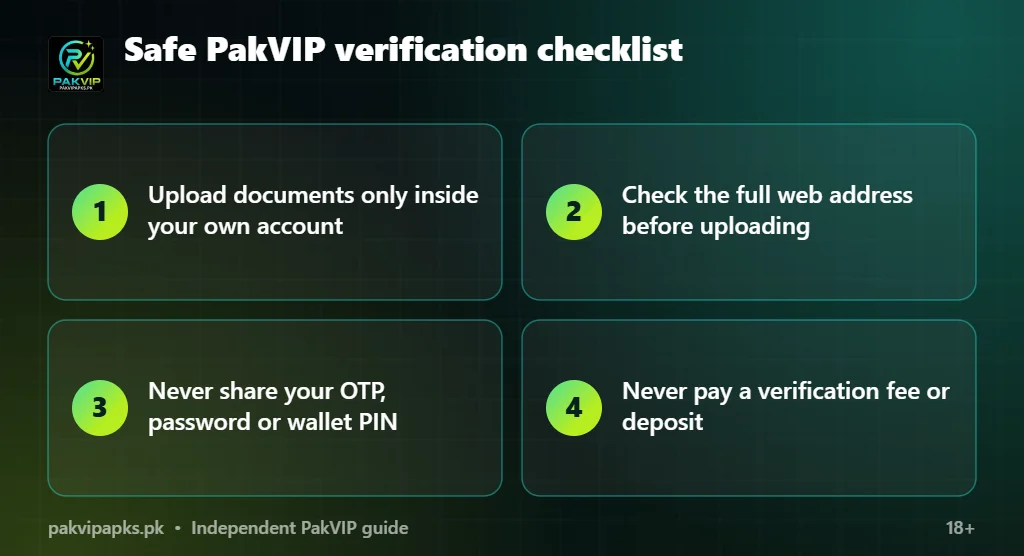
- Upload documents only through the verification screen inside your own account, never through a chat that contacted you first.
- Check the full web address before uploading anything in a browser.
- Understand why the document is needed before you share it.
- Where the process allows it, add a visible note such as “For PakVIP verification only” across a copy of the image.
- Never send your OTP, password or wallet PIN as part of verification.
A CNIC image can be misused for fraud if it falls into the wrong hands, so treat it with the same care as your wallet PIN.
Signs of a Fake Verification Request
- Someone asks for your CNIC on WhatsApp or Telegram and says your account will be closed without it.
- You are asked to pay a “verification fee” or make a “verification deposit”.
- The request asks for your OTP or wallet PIN.
- The link opens a page that is not the platform you normally use.
Read PakVIP Real or Fake? for more warning signs.
If Verification Is Rejected
Check the reason shown. Common causes are blurry photos, cropped edges, expired documents or a name that does not match the payment account. Take a new, clear photo in good light and submit it once through the same screen. If a withdrawal was refused because verification was incomplete, PakVIP Withdrawal Rejected lists the other checks to make, and PakVIP Account Blocked or Restricted explains what to do if the account has been limited.
If You Shared Your CNIC With a Scammer
- Stop all contact and do not send anything else.
- Change your account passwords and turn on any available security options.
- Check which SIMs are registered in your name using the PTA’s official SIM information service (668).
- Tell your bank and wallet provider so they can watch for suspicious activity.
- Report the fraud to the NCCIA through its official complaint channels.
Frequently Asked Questions
Play responsibly. Real-money gaming is for adults aged 18 or over only and can lead to financial loss.